Comics and manga: when to keep fixed pages
Comics rely on panel sequence, balloon placement and lettering. Keep fixed pages when adjustable prose would lose the visual relationships that tell the story.
On this page
Follow panels in their intended order
- Identify whether the story depends on page composition.
- Follow the panels in their intended direction.
- Check lettering at your reading size.
- Prefer the original layout when reflow breaks the sequence.
Choose around the visual storytelling
A comic page can use panel size and position to control timing. Speech balloons also depend on their connection to a character, and some books have a reading direction different from ordinary left-to-right prose. Follow the actual source sequence rather than imposing a paragraph model. If zooming a fixed page remains the only way to understand lettering and composition, keep the PDF. EPUBTurn is more relevant to illustrated prose than a promise to convert every panel-based narrative into a comfortable reflowed comic.
Follow McCay’s actual comic page
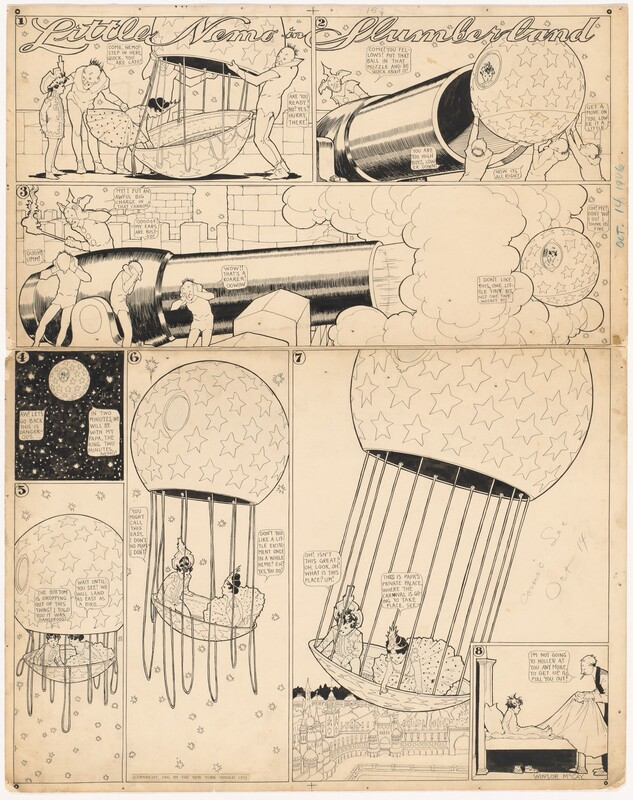
The National Gallery of Art publishes Winsor McCay’s 1906 Little Nemo in Slumberland drawing titled I don’t like this, one little tiny bit, not one tiny weenie bit. Inspect the original complete page, including panel boundaries and speech balloons. Follow the intended panel sequence before zooming into one balloon. A collection of pictures or recognised dialogue cannot reproduce how that page guides the reader through the action. The museum marks its media as public domain. No EPUB conversion of the comic is claimed; the page illustrates why a fixed-page reading copy can be the better choice.
Open the published source.
Page composition may suit the PDF better
EPUBTurn focuses on reconstructed reading content and useful illustrations. A comics-only PDF may be better read in its original fixed layout. This article does not promise manga reading-direction reconstruction.
Read the complete page before zooming
At full-page view, identify the panel boundaries and the order of the balloons within each panel. Then zoom into a crowded panel and check whether you can still tell which speaker and action belong together. Return to the whole page to follow the next panel. If a reading app makes that movement awkward, keeping the original image or PDF may serve the comic better than a reflowed copy. Format choice should follow the published page’s actual composition.
Keep page composition central to the choice
EPUBTurn’s NASA sample retains a useful hardware illustration in a prose reading copy. McCay’s actual comic page depends on several panels and speech balloons guiding a single visual sequence, so the hardware result is not a comic conversion test. Inspect the whole comic at your reading screen size before replacing its fixed page. Use EPUBTurn only when adjustable prose is part of your actual task; retain the original artwork for panel-dependent reading.
Open the actual source PDF · Download the saved EPUBTurn sample.
For your own document, create an EPUBTurn sample from your PDF, then use the reading checks described here.
Sources and further reading
Related guides
- BOOX PDF or EPUB reading: choose by the task
- Choose PDF or EPUB for reading on reMarkable
- Fixed layout or reflowable EPUB: choose by the reading task
- How to convert magazines into EPUB with EPUBTurn
- How to convert an illustrated novel into EPUB
- How to convert annual reports into EPUB with EPUBTurn
- How to convert instruction manuals into EPUB with EPUBTurn
- How to convert a PDF newsletter into EPUB
- How to convert recipe PDFs into EPUB with EPUBTurn
- When EPUB reflow changes the meaning of poetry
- Illustrated PDF to EPUB: actual diagrams, charts and reading results